
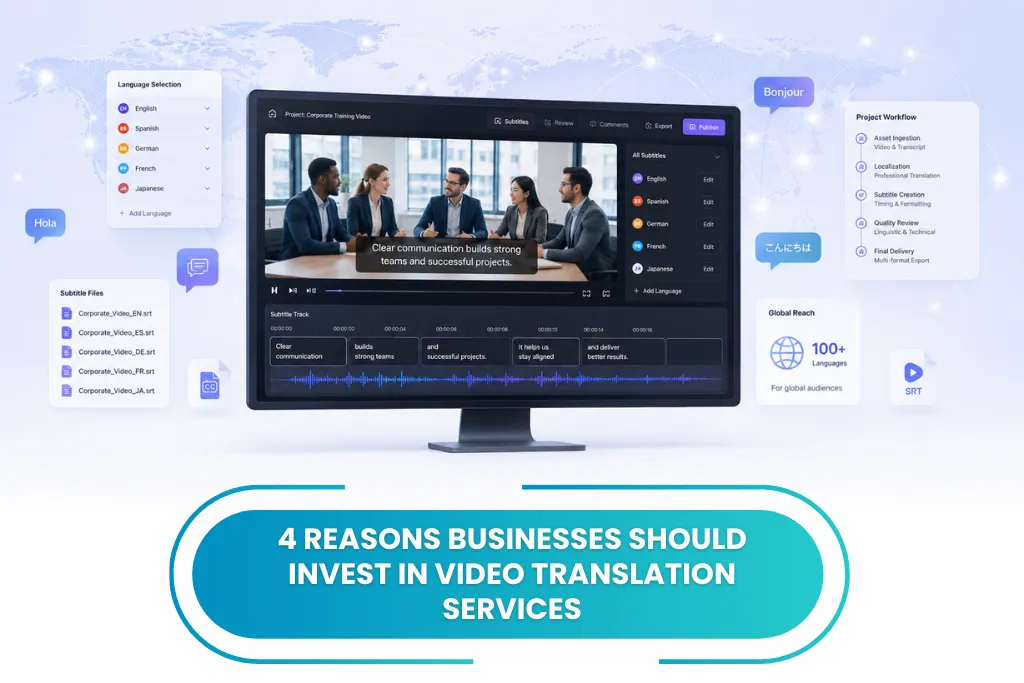
Video translation services convert video content from one language into another through a combination of subtitling, voice-over, and dubbing, supported by transcription and audio localization to make sure the message lands the same way for every audience. For businesses creating training videos, marketing campaigns, or product demos, this means a single source video can reach viewers in multiple languages without losing accuracy, tone, or cultural relevance. Below are four reasons why investing in professional video translation services should be part of every business’s growth strategy, along with what the process actually involves.
What Do Professional Video Translation Services Include?
Before looking at the reasons to invest, it helps to understand what the service actually covers. Professional video translation services typically bring together several disciplines under one video translation project:
Transcription services – converting spoken content in the original video into a written script or txt file, which becomes the base for translation.
Subtitle translation – translating the transcript into the target language and formatting it into accurate subtitles with correct subtitle timing and subtitle formats.
Audio localization services – adapting audio files, on screen text, and cultural references so the video content feels native rather than translated.
Dubbing services – replacing the original audio with translated voice using professional voice talents, so mouth movements and pacing stay natural.
Interpretation services – used for live events, webinars, or multilingual videos that need real-time language support.
Together, these steps make up the full video translation process, turning one video file into a version ready for audiences worldwide.
Reason 1: You Reach Global Audiences Across Multiple Languages
The most direct reason to invest in video translation is reach. A single piece of video content, once translated, can serve international audiences instead of just one language market. Video translation services support over 100 languages, so businesses can prioritize the specific language pair that matters most to their target audience, whether that’s for a product launch, an internal training rollout, or a customer-facing explainer.
This matters most for training videos, marketing campaigns, and advertising videos, where the cost of producing original content is already high. Rather than reshooting a video for every market, businesses can translate video files once and distribute translated video across regions. Native speakers and human translators handle the nuance that automated tools alone tend to miss — idioms, tone, humor, and industry terminology all need a human eye before they reach global audiences.
Reason 2: It Strengthens Marketing Campaigns and Post-Production Value
Video marketing depends on emotional connection, and that connection breaks down quickly when content feels translated rather than made for the viewer. Localized marketing campaigns consistently perform better with international audiences because the message, visuals, and on screen text all work together in the target language.
This is where video translation ties directly into post production. Instead of treating translation as an afterthought, businesses that build it into their production team’s workflow — alongside editing, sound design, and final review — end up with multilingual videos that feel like original content in every language, not a dubbed-over version of one. Translating marketing materials this way opens doors to international markets that would otherwise be difficult to enter with generic, single-language content.
Reason 3: Subtitle Translation and Professional Dubbing Build Credibility
How a translated video sounds and reads directly affects how credible a business appears to a new market. Accurate subtitles, correct subtitle timing, and natural-sounding dubbing signal that a company has invested real effort into that audience, rather than relying on a quick auto-generated pass.
Professional dubbing services enhance viewer engagement by matching voice casting to the tone of the original content, so the translated voice actually fits the brand and the speaker. Professional dubbing services also maintain high accuracy through native speakers who understand regional expressions, not just literal translations. Meanwhile, multilingual subtitles and closed captions increase accessibility for deaf or hard of hearing viewers, extending a video’s reach even within a single-language audience. Professionally localized videos, done well, help businesses build credibility in different cultures faster than any other form of content.
Reason 4: Audio Localization and Transcription Improve Accessibility and Visibility
Audio localization services do more than translate spoken content — they adapt background audio, tone, and pacing so the translated version feels consistent with the original video. This starts with professional transcription, which converts spoken dialogue into an editable text file, giving translators and voice talents a reliable reference for every stage of the project.
There’s also a search visibility benefit that’s easy to overlook. Video translation can improve global search engine visibility because translated subtitles, captions, and video metadata give search engines in different regions actual text to index — something a video without translated text simply can’t offer. For businesses running video marketing at scale, this turns every translated video into another entry point for organic traffic from international audiences.
Where Do AI Video Translator Tools Fit In?
AI video translator and ai dubbing tools have made parts of the video translation process faster, particularly for transcription and rough-draft subtitle generation. AI-powered video translation can be useful for simply upload-and-generate workflows when speed matters more than nuance — for instance, an internal training video with a tight deadline.
However, AI tools still struggle with cultural nuance, tone, humor, and industry-specific terminology, which is exactly where translations need to feel native to viewers rather than mechanically accurate. This is why most agencies pair any AI video step with human review from native speakers before a video reaches its target audience. For marketing campaigns, advertising videos, and any content representing a brand publicly, human translators and voice talents remain essential to getting the translated video right the first time.
How Lingual Consultancy Delivers High Quality Video Translation
At Lingual Consultancy, video translation services are built around a human-first video translation process — from transcription and subtitle translation to audio localization and professional dubbing — supported by creative teams and voice talents who work across a wide language pair range. Every video translation project goes through human review before delivery, so businesses get translated video content that’s accurate, culturally relevant, and ready for global audiences, whether it’s for training videos, marketing campaigns, or social media videos.
Frequently Asked Questions (FAQs)
1. What is included in video translation services?
Video translation typically includes subtitling, voice-over, and dubbing, along with transcription and audio localization to prepare a video for a new language market. Depending on the project, it may also include interpretation services for live content. At Lingual Consultancy, these services are handled end-to-end, from the original transcript through final dubbed or subtitled output, so businesses don’t need to coordinate multiple vendors for one video.
2. How is dubbing different from subtitling?
Dubbing replaces the original audio with translated voice recorded by voice talents, while subtitling keeps the original audio and adds translated text on screen. Dubbing suits marketing and training videos where full immersion matters, while subtitles work well for social media videos and accessibility. Lingual Consultancy offers both, helping businesses choose the right format based on target audience and platform.
3. How many languages can a video be translated into?
Most professional video translation services support over 100 languages, covering everything from major global languages to more region-specific ones. The right language pair depends on the target audience and market priorities. Lingual Consultancy works across a wide range of languages, matching each project with native-speaking translators and voice talents for that specific language.
4. Can video translation help with international SEO?
Yes — translated subtitles, captions, and metadata give search engines actual text to index in the target language, which can improve visibility in international search results. This makes video translation a practical addition to any global content or video marketing strategy. Lingual Consultancy delivers translated subtitles and text files formatted for both viewers and search engines, supporting SEO goals alongside translation quality.
5. Is AI enough for accurate video translation?
AI tools have gotten better at handling basic transcription and draft subtitles, and they can be a reasonable starting point for simple, low-stakes videos. But industries like legal, healthcare, and finance work with content where even a small mistranslation can cause real harm, so these videos call for human translation rather than automated shortcuts. Lingual Consultancy relies on native-speaking human translators for video translation, ensuring the accuracy and context these industries require.
6. How long does a typical video translation project take?
Turnaround time depends on video length, language pair, and whether dubbing or subtitling is required, but fast turnaround is achievable without skipping quality checks when the right team is in place. Tight deadlines are common with marketing campaigns and product launches. Lingual Consultancy structures its video translation process to meet deadline-driven projects while still including human review before delivery.
7. What file formats are needed to start a video translation project?
Most projects start with the original video file and, if available, an existing transcript or txt file of the spoken content; if not, transcription is done first. From there, the translation and localization steps are built out based on whether the final deliverable is subtitles, dubbed audio, or both. Lingual Consultancy accepts standard video files and formats, handling everything from transcription through final delivery in the client’s preferred subtitle or audio format.

