
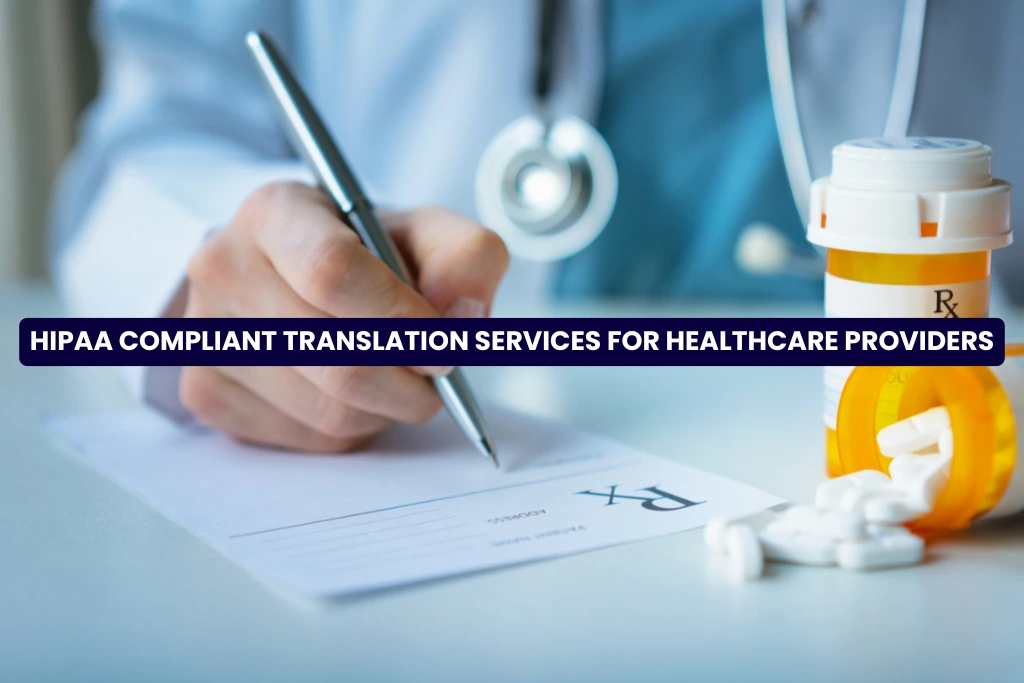
This article clearly explains what healthcare providers need to consider when choosing HIPAA compliant translation services. It outlines how HIPAA compliance applies to medical documents and medical records, the technical and organizational safeguards that must support a secure translation process, and how HIPAA compliant translation protects both translation accuracy and patient safety. It also helps you understand how to select professional, certified medical translators who safeguard sensitive medical information while delivering high-quality medical translations you can trust.
What HIPAA compliance means for medical documents
Health Insurance Portability and Accountability Act (HIPAA) compliance — sometimes shortened to the Accountability Act — requires healthcare organizations to protect patient records and other sensitive medical information. When healthcare providers ask a translation company to translate medical documents, those translated documents and the translation process itself become part of the regulated data flow. Full compliance means documented safeguards for data security, strict confidentiality agreements, and written policies that cover everything from electronic files to paper originals. For medical professionals and compliance officers, this isn’t optional — it’s central to patient care, legal risk management, and better health outcomes.
Why healthcare providers need secure translation services
Healthcare providers increasingly need to translate medical texts such as informed consent forms, clinical trial documents, medical reports, and patient information leaflets into target languages. Using uncertified or ad-hoc translation services risks compromising quality and patient safety. Secure, professional medical translation services protect patient care by ensuring accurate translations of treatment plans, medical device instructions, and regulatory documents — all while maintaining data security and compliance with healthcare regulations.
Types of healthcare documents that require HIPAA-secure translation
Patient records and medical records, including treatment notes and discharge summaries
Informed consent forms and patient information leaflets
Clinical trial documents and case report forms for pharmaceutical companies
Medical device documentation, manuals and medical device instructions
Regulatory documents, insurance and billing records
Medical reports, medical content for patient portals, and medical texts used in clinical research
Each of these document types can include PHI (protected health information). When translating medical content, providers must ensure translators are contractually bound to strict confidentiality and that the translation company has secure workflows for both electronic and physical files.
Translate medical documents: the secure translation process
A compliant translation process for medical document translation should include:
A signed Business Associate Agreement (BAA) or equivalent that explicitly covers translated documents and interpretation services.
Encrypted file transfer and secure storage with role-based access controls.
Use of professional translators and subject matter experts who understand medical terminology and the language pair required.
Documented QA that includes back translation, bilingual review, and final sign-off by certified translators or native speakers.
Clear retention and deletion policies for original documents and translated documents to meet regulatory requirements.
A clear escalation path for suspected breaches of sensitive medical information.
Using translation memory and secure CAT tools can improve consistency and turnaround time while preserving translation accuracy — provided the tools are operated within a secure environment that meets HIPAA standards.
Translation accuracy: why it matters and how to ensure it
Translation accuracy in medical translations is not just a quality metric — it directly affects patient safety and outcomes. Mis-translating a dosage in a medical device manual, a detail in an informed consent form, or a treatment plan can have real-world harm. To ensure accurate translations:
Hire certified medical translation services and professional translators with clinical experience.
Include subject matter experts and native speakers in the review cycle.
Use back translation for high-risk texts (clinical trial documents, consent forms, regulatory submissions).
Maintain a glossary of medical terms and a translation memory for consistency across a medical translation project.
Avoid sacrificing accuracy for speed; set realistic turnaround time expectations and prioritize clear communication over rushed delivery.
Who should be involved: medical translators and the project team
A compliant translation project typically involves:
Certified translators and professional translators with medical backgrounds
Subject matter experts (clinicians, pharmacologists) for technical review
Native speakers for cultural appropriateness and patient-facing content
Project managers from the translation company to coordinate secure workflows
The healthcare organization’s compliance officer to approve BAAs and security controls
Choosing translators who are trained in medical terminology and who have experience translating clinical research, medical device manuals, or pharmaceutical regulatory documents reduces risk and improves quality.
Data security and confidentiality: technical and organizational safeguards
Medical translation services must treat translated files as part of the healthcare organization’s PHI environment. Required safeguards include:
Encrypted transfer and encrypted at-rest storage
Multi-factor authentication and role-based permissions
Secure, auditable platforms (no unsecured email or public file-sharing)
Strict confidentiality clauses and NDAs for freelancers and contractors
Regular security audits and incident response plans
These measures protect original documents and translated outputs from unauthorized access and ensure accountability if a breach occurs.
Balancing speed, cost and high quality medical translations
Healthcare organizations often need rapid translations, but speed should not mean compromising accuracy or compliance. Best practices:
Use certified translations for high-risk medical texts; employ MT + human post-editing only when it meets regulatory and security criteria.
Build translation memory to reduce cost and turnaround time across recurring documents.
Bundle related documents into a single medical translation project to improve consistency.
Choose a translation partner that offers additional services such as back translation, interpretation services, desktop publishing for medical device manuals, and certified translations for regulatory filings.
What Healthcare Providers Should Look for in a HIPAA-Compliant Medical Translation Agency
When selecting a partner for HIPAA-compliant medical translation services, healthcare providers should ensure the agency offers the following:
Signed Business Associate Agreement (BAA) and clear documentation demonstrating HIPAA compliance and adherence to healthcare regulations.
Robust data security measures, including encrypted file transfer, secure cloud storage, role-based access controls, and audit trails to protect sensitive medical information.
Use of certified translators and experienced medical translators, along with subject matter experts who have a deep understanding of medical terminology and clinical contexts.
Capability to handle diverse healthcare documents — including medical records, clinical trial documents, informed consent forms, medical device documentation, and regulatory materials — across required language pairs and target languages.
Structured quality assurance (QA) processes, such as bilingual review, back translation (where required), terminology management, and secure translation memory systems to ensure translation accuracy and consistency.
Defined translation process with clear timelines, demonstrating the ability to manage turnaround time without sacrificing accuracy, compliance, or patient safety.
Proven experience in healthcare and clinical research environments, with references or case studies involving hospitals, healthcare organizations, pharmaceutical companies, or medical device manufacturers.
Strict confidentiality policies and internal security protocols, ensuring both original documents and translated documents remain protected throughout the medical translation project lifecycle.
A responsible translation company will provide transparent answers, documented compliance procedures, and verifiable experience handling high-risk medical content — including clinical research materials, medical device manuals, regulatory documents, and patient-facing healthcare documents.
Practical checklist for healthcare providers
Ensure BAA is in place before transferring any patient records.
Verify data security: encryption, access control, and audits.
Confirm translators’ credentials and medical experience.
Require documented QA: back translation, SME review, and final sign-off.
Keep an audit trail of translated documents and communication.
Avoid sending PHI via unsecured email or consumer MT tools.
Maintain cultural appropriateness for patient-facing content to support effective communication.
Conclusion
HIPAA compliance in medical translation is a cross-functional responsibility that protects patient safety, preserves the integrity of medical records, and helps healthcare organizations avoid regulatory and reputational risk. By choosing certified medical translation services, insisting on a secure translation process, and prioritizing translation accuracy and subject matter expertise, healthcare providers can deliver clear communication to diverse patient populations while maintaining full compliance with healthcare regulations.
Frequently Asked Questions (FAQ)
1. Do healthcare providers need a BAA with a translation vendor?
Yes. Healthcare providers must sign a Business Associate Agreement (BAA) with any translation vendor that handles Protected Health Information (PHI). Under HIPAA, a translation provider that accesses medical records, patient data, or other healthcare documents is considered a Business Associate and must implement appropriate data security safeguards.
Lingual Consultancy signs BAAs before project initiation and maintains documented administrative, technical, and physical safeguards to support full HIPAA compliance.
2. Can machine translation be used for clinical or medical documents?
Machine translation can only be used for clinical or medical documents if it operates within a secure, HIPAA-compliant environment and is followed by professional human review. Public or unsecured machine translation tools should never be used for documents containing PHI.
Lingual Consultancy uses secure translation technologies combined with certified medical translators to ensure compliance, translation accuracy, and patient safety—especially for high-risk materials like informed consent forms and clinical trial documents.
3. How is translation accuracy ensured for medical device manuals?
Translation accuracy for medical device manuals is ensured through specialized medical translators, subject matter expertise, terminology management, and structured quality assurance processes such as bilingual review and back translation.
At Lingual Consultancy, certified medical translators and technical experts follow a multi-step QA workflow to ensure accurate, compliant, and patient-safe translations of medical device documentation and manuals.
4. What types of medical documents require HIPAA-compliant translation?
Any document containing Protected Health Information (PHI) requires HIPAA-compliant translation. This includes medical records, patient reports, informed consent forms, clinical trial documents, regulatory submissions, medical device documentation, and patient information leaflets.
Lingual Consultancy provides secure medical translation services for healthcare providers, pharmaceutical companies, and clinical research organizations across multiple language pairs and target languages.
5. How do HIPAA-compliant translation providers protect sensitive medical information?
HIPAA-compliant translation providers protect sensitive medical information through encrypted data transfer, secure storage systems, access controls, confidentiality agreements, and documented incident response procedures.
Lingual Consultancy uses encrypted platforms, role-based access controls, strict NDAs, and secure workflows to safeguard both original and translated healthcare documents throughout the translation process.
6. How fast can certified medical translations be delivered without compromising compliance?
Certified medical translations can be delivered efficiently when structured workflows, experienced translators, and secure translation technologies are used. However, compliance, accuracy, and patient safety must never be compromised for speed.
Lingual Consultancy optimizes turnaround time using secure translation memory systems and expert review processes, ensuring high-quality medical translations that meet both regulatory requirements and project deadlines.

